

Day 1: Lima, Peru.
Arrival in Lima, where our local representative will meet you at the airport and transfer you to our hotel. Our location near the airport provides easy access to tomorrow morning’s flight to Iquitos. Enjoy dinner on your own tonight.
Day 2: Lima / Iquitos / Nauta — Embarkation / Cruising the Marañón River
From the capital of Peru, we fly east over the Andes Mountains and land in Iquitos. Accessible only by air or water, this once-prosperous rubber boom town is now one of the largest cities in the Amazon Basin. We transfer to Nauta, a small riverside town on the banks of the Marañón River, one of the main headwaters of the Upper Amazon. Here we board our luxurious river vessel, the M/V Agua Marina, reserved exclusively for International Expeditions’ guests.
As we glide upriver toward the headwaters of the Amazon, we enjoy panoramic views from the open-air upper deck and sip cocktails made from regional fruits and pisco, Peru’s famous national spirit, while our expedition guides provide an introduction to the journey. These legendary waters—known as the “river sea”—are alive with the movement of small boats heading to market as the skies fill with birds. At nightfall, we return to the deck to admire the stars in the tropical sky.
Day 3: Pahuachiro Creek / Fundo Casual Trail / Nauta Caño Creek
Early risers are rewarded with abundant bird and wildlife sightings during a morning skiff excursion through Pahuachiro Creek. We depart at dawn, when wildlife is most active in the tropics. The creek, with black yet crystal-clear water the color of dark tea, is tinted by tannins from dense riverside vegetation.
Along this narrow waterway, we often observe various monkey species, such as squirrel monkeys, monk sakis, and brown capuchins, as well as a wide variety of birds: large-billed terns, laughing falcons, blue-gray tanagers, snowy egrets, horned screamers, tiger herons, short-tailed parrots, parakeets, and perhaps even the striking scarlet macaw.
It’s important to note from the beginning that Amazon wildlife is expert at hiding—an experienced eye is needed to spot animals concealed within dense vegetation. That’s where our expert guides come in!
After breakfast, explore the Fundo Casual Trail, entering the forest in search of sloths, birds, and more. Keep an eye out for colorful poison dart frogs, leafcutter ants, and other fascinating small creatures along the path.
Navigating toward Nauta Caño Creek, we explore the swamps, small streams, and oxbow lakes along this tributary, searching for various birds and animals. We may even spot a three-toed sloth curled up in a cecropia tree.
As night falls, an exciting adventure awaits: witnessing the transformation of the rainforest as nocturnal creatures awaken. A symphony of sounds fills the air—crickets and night birds set a rhythmic pulse. In the darkness, our guides use powerful spotlights to search for wildlife. It’s common to see black caimans, frogs, common potoos, black-crowned night herons, pauraques, spectacled owls, and nightjars along the shore, while fishing bats swoop down to catch fish from the water.
Day 4: Amazon Natural Park / Pacaya Samiria National Reserve
This morning, we stop at Amazon Natural Park for a walk in the rainforest. Surrounded by the symphony of wildlife resonating from the dense vegetation, we will search for capybaras, howler monkeys and tamarins, tapirs, sloths, and a wide variety of birds. The terra firme forest is filled with fascinating layers of flora, including walking palms and trees adorned with epiphytes.
Later in the day, as we continue upriver on the Marañón, a variety of exploratory options await. With six double self-bailing kayaks and open skiffs, choose your means of exploration to investigate an essentially untouched section of the Pacaya Samiria National Reserve, where the Yanayacu and Pucate rivers meet.
Established in 1982 to protect the extraordinary biodiversity of the northern Amazon, this 2-million-hectare sanctuary is the largest protected area in Peru. Massive ceiba trees and strangler figs line the banks, hosting a wide range of wildlife. Our expedition guides explain the many microecosystems found here, in one of the reserve’s most pristine areas. At nightfall, head up to the upper deck to listen to the rainforest’s nocturnal symphony.
Day 5: Confluence of the Ucayali & Marañón Rivers / Yarapa River / San José de Paranapura
Awaken at the confluence of the Ucayali and Marañón Rivers, where they merge to form the main channel of the mighty Amazon River. We explore the confluence on a morning skiff ride. Returning onboard for breakfast, we sail along the Ucayali until reaching the mouth of a remote tributary of the Upper Amazon: the Yarapa River.
We board skiffs or kayaks to spot colorful birds such as the purple-throated cotinga and to search for pink and gray river dolphins that sometimes glide gracefully alongside us. These freshwater cetaceans are friendly, sociable, and intelligent. Local legend holds that during village celebrations, dolphins transform into humans to steal away handsome men or beautiful women.
Later, we disembark for a short skiff ride to San José de Paranapura, a riverside village where we meet Indigenous residents whose culture has thrived here for centuries. At the handicraft market, we may purchase items that support the community and empower its women artisans. These sales indirectly aid wildlife conservation by reducing the need for subsistence hunting.
We also meet the village’s esteemed shaman, known throughout the region as a healer and spiritual guide. We learn about the uses of medicinal plants sourced from the world’s largest natural pharmacy: the Amazon rainforest. Afterward, return to the M/V Agua Marina for dinner.
Day 6: Belluda Caño Creek / Dorado River
This morning we visit Belluda Caño Creek near Yanallpa, home to the ribereño people—Indigenous inhabitants of the rainforest for centuries. This small tributary is a prime location for spotting pink river dolphins. Traveling in open skiffs, we may get a close look at these rare creatures if luck is on our side.
High in the canopy, we search for saki monkeys foraging in small family groups. Cruising through the narrow channels of the Dorado River within Pacaya Samiria Reserve, we immerse ourselves in the lush heart of the world’s largest tropical rainforest.
As we glide slowly through this rich ecosystem, we search for snail kites, parrots, olive-spotted hummingbirds, woodcreepers, and red macaws—an endangered species. Squirrel monkeys move in large, noisy troops overhead, while iguanas sun themselves along the branches. At every turn, our guides reveal the rainforest’s secrets, helping us spot creatures perfectly camouflaged from the untrained eye.
At night, from our skiffs, we scan the riverbanks for spectacled caimans, frogs, owls, and capybaras—the world’s largest rodent. Keep watch for night monkeys—the world’s only nocturnal monkeys—resting in the canopy as they prepare for their nightly search for food.
Day 7: Pacaya River / Supay Cocha
This morning we reach the Pacaya River, in the heart of the Pacaya Samiria Reserve. This vast flooded landscape, known as the “mirror forest,” spans 25,900 square kilometers at the headwaters of the Amazon and holds the highest concentration of wildlife in Peru.
We set off to explore this emerald kingdom of trees, vines, streams, lagoons, and islands. High in the canopy, we search for macaws, black-collared hawks, hoatzins, and capuchins, and listen for the haunting roars of red howler monkeys, whose calls echo for miles across the treetops.
We begin to perceive the reserve’s layered richness: its 85 lakes host 250 fish species; it protects 132 mammal species (most quite elusive), 150 reptiles and amphibians, and 450 bird species. The reserve also shelters Peru’s greatest diversity of plants, including massive bromeliads and 22 species of orchids.
This afternoon, enjoy another skiff or kayak excursion to Supay Cocha, a lagoon teeming with fish. Watch for troops of squirrel monkeys, sloths, and a wide array of birds, including white-tailed and black-tailed trogons and paradise tanagers.
Day 8: Ucayali River / Marañón River — Visit to Amazonas Village
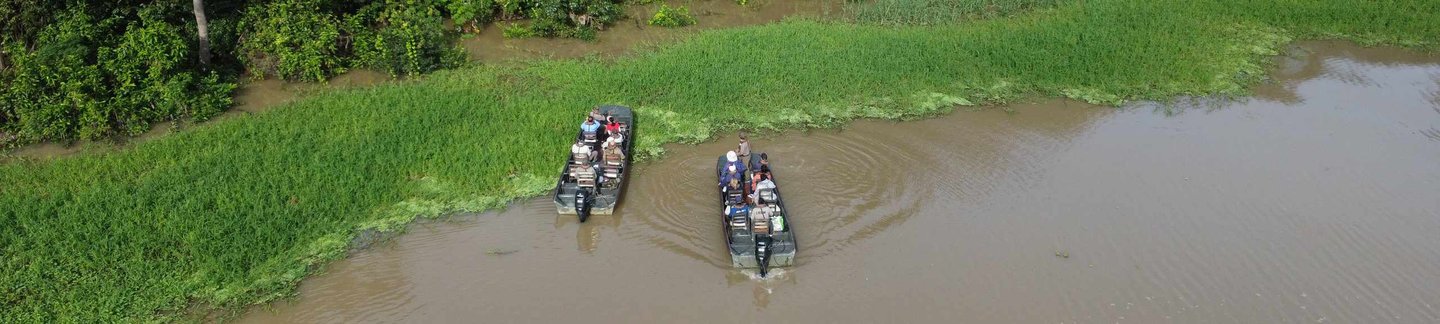
During a morning skiff excursion along a tributary of the Ucayali River, we hope to observe herons, hawks, and long-legged neotropic cormorants fishing for their breakfast, while jacanas compete for food with spiders, and grasshoppers and butterflies flutter around the edges of freshwater marshes.
In the afternoon, we return to the Marañón River, upriver from the confluence, to visit the village of Amazonas. Its inhabitants belong to the Cocama ethnic group, the original inhabitants of this region. During our visit, we learn about the natural dyes used by the village women to color handicrafts made from rainforest materials such as palm fibers, roots, seeds, and tree bark—items available at the local handicraft market.
We also meet other members of the community, who share their roles in village life. Back on board, we head to the observation deck to enjoy one last night of stargazing under the Amazon’s black sky.
Day 9: Nauta — Disembarkation / Iquitos / Lima / Departure
Disembark in Nauta this morning and, on our way to Iquitos, stop to visit the Amazon Aquarium, a research center that contributes to the preservation of Amazonian biodiversity through the study and conservation of over 300 species of ornamental fish.
Located near natural spring waters that flow year-round, the center focuses on creating a long-term balanced ecosystem that benefits both the environment and the local economy. Through ongoing education and hands-on training, local fishermen learn to establish sustainable ornamental fish aquaculture, while community members learn conservation principles and practices.
We then fly together to Lima. For your comfort, we have reserved rooms at a convenient airport-area hotel. Relax in your private space until your nighttime flight home, or choose to stay overnight and depart the next morning.
Note: This itinerary is intended as a general guide and may change due to weather conditions, internal flight schedules, and river levels. At times, these conditions may require us to modify the planned route, in which case we will offer the best possible alternative—and turn it into a great adventure!